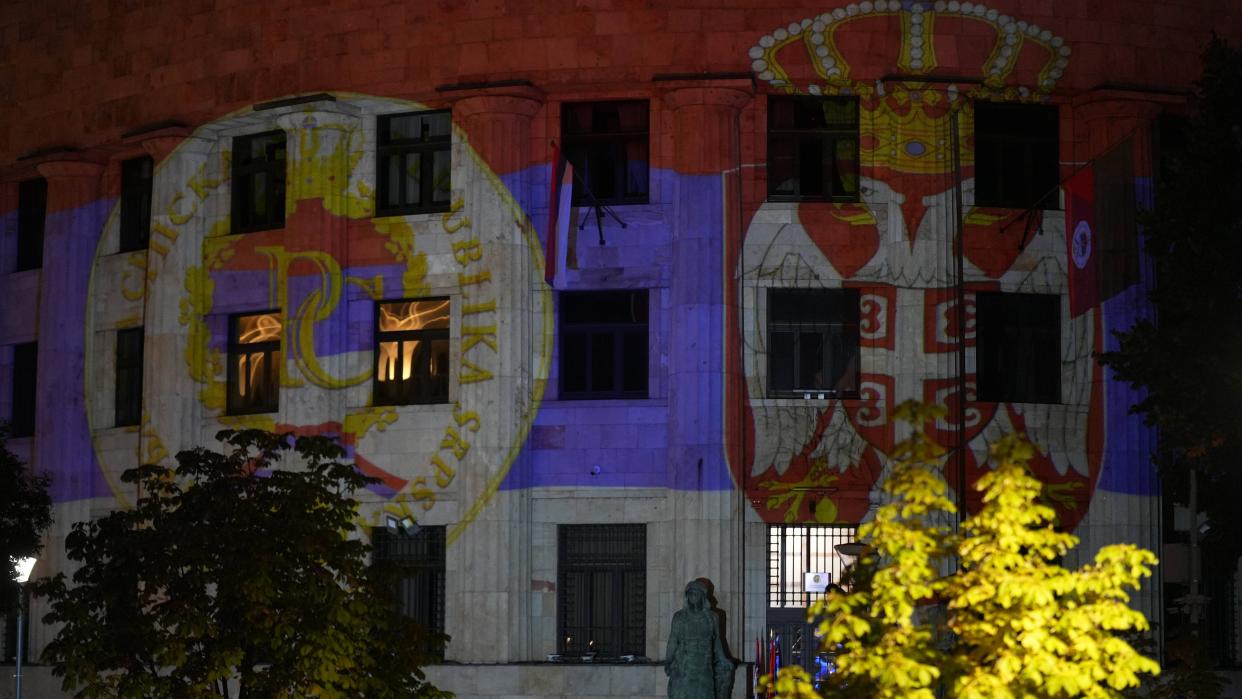
The coming presidential elections in the Republika Srpska entity mark the beginning of a new chapter in Bosnian politics, as Milorad Dodik’s departure from the official political scene in Bosnia changes the balance of power between the entity and the central-level authorities. In late September Dodik’s’ Alliance of Social Democrats (SNSD), after initially refusing to participate in the elections following the Constitutional Court (CC) verdict removing him from the office of the RS presidency, decided to appoint Dodik’s long-time party colleague, Minister Sinisa Karan, as their candidate for the post. A veteran in Republika Srpska politics, if Karan wins the elections – on an election playing field that is tilted towards the incumbent party – he is more likely to focus on consolidating the power structures and stabilising relations within the entity than more reactivating the secession play.
On 29 October, furthermore, the US – still closely involved in managing Bosnian affairs, albeit less openly – lifted sanctions on Dodik and his complete entourage, noting that these were the results of US-led efforts “to defuse the crisis in Bosnia and Herzegovina”. It is assumed to be part of a broader package of back-door negotiations aimed at exerting pressure on Dodik to comply with the state-level authorities. And Karan, who until recently was on the US Treasury Department’s blacklist for participating in the organisation and celebration of unconstitutional holidays of Republika Srpska in 2024 – which were ruled unconstitutional by the Bosnian constitutional court – is now free from sanctions. He will therefore seek to show a constructive position towards the pragmatic and transactional administration of President Trump. The central issue is thus whether the American volte-face with Dodik is a tit-for-tat exception or marks the beginning of a new US policy approach to re-designing Bosnia. In any case, RS will seek to rally support from the US for fresh political initiatives ahead of the pivotal general elections in autumn 2026. Nonetheless, the opposition which has by now de facto coalesced around Branko Blanusa, the candidate of the Serb Democratic Party (SDS), has a chance to frame the political campaign and test voters’ position ahead of next year’s more important election.
Domestic development and future of RS
Politics in Bosnia will only grow more unsettled until next year’s general elections. While the short-term risk of secession is low, the underlying political ideology and structure in RS remain unchanged. Sinisa Karan embodies its revisionist and confrontational agenda. As a key figure responsible for implementing policies aimed at undermining Bosnia’s institutional integrity, Karan has spent most of his political career within the RS security apparatus, culminating in his appointment as Minister of the Interior in 2022. He previously served as Secretary General of both the SNSD and the Government of Republika Srpska. During Dodik’s earlier phase of inflaming ethnic divisions within Bosnia, Karan chaired the referendum commission that organised the September 2016 vote defying a Constitutional Court ruling banning the entity’s “Statehood Day.” More recently, he was the senior SNSD official overseeing and implementing the working group on drafting laws to leave state-level BiH institutions and create new institutions in RS, de facto preparing the ground for full-scale secession. As a response, on 17 January 2025, the US Department of Treasury sanctioned RS President Dodik’s patronage network and individuals for undermining regional peace and the rule of law. Karan’s prospective role in this transitional phase is likely to mark the beginning of a broader recalibration of Republika Srpska’s approach toward Washington. He is expected to spearhead a diplomatic charm offensive aimed not only at reshaping American perceptions of his own political profile, but also at redefining the parameters of US engagement with the RS entity – with far-reaching consequences for the wider region.
Secession evaded and long-term prospects
Following Donald Trump’s election to the White House, the leadership of Republika Srpska, with Dodik at its centre, anticipated the dawn of a new political approach toward Bosnia. Yet Dodik, still at the heart of political power in RS, misjudged international developments and Washington’s political mood, continuing his efforts to exploit the global interregnum to reshape realities in this fragile country. However, after the US and leading European powers set down red lines, Dodik ultimately complied with Washington’s directive and stepped down from public office. For Republika Srpska, whose governance has long rested on personalised rule, Dodik’s persona carries political weight extending far beyond the institutional norms of liberal democracies. The emerging political configuration will therefore remain inherently fragile and vulnerable to renewed intra-party and entity-level struggles for power. The challenge ahead lies in disentangling a deeply entrenched power structure that the SNSD has cultivated for over two decades. In an increasingly autocratic environment – where party and state have effectively fused – there is little reason to expect a sudden shift in the Serb leadership’s fundamental policy orientation. The pursuit of greater autonomy, and ultimately the long-term aspiration for independence, will remain central to the political agenda of Republika Srpska.
While the US may differ in normative values and geopolitical statecraft, it remains engaged in this region and intends to deploy its power to shape the political environment and safeguard peace and stability. Local ethno-nationalist leaders across the region will seek to appeal to national conservative and authoritarian currents within Washington’s corridors to gain more leeway. However, the US will not accommodate local revisionist ambitions, let alone secessionist agendas, not least due to resistance from European powers, who hold a stake in the matter in the same way as they hold a stake in US efforts to end Russia’s war of aggression against Ukraine. Republika Srpska may benefit from improved individual ties, but it will not be permitted to operate outside Bosnia’s state framework. On the 30th anniversary of Dayton, it appears that Bosnia and Herzegovina has gained a symbolic win – Washington’s engagement in the form of a backstop serving as a modest birthday gift.
The final piece in this multilayered regional puzzle concerns Serbia – the key factor in determining how far its kin in Bosnia are permitted to pursue their political ambitions. Facing mounting internal and external pressures, Belgrade has increasingly distanced itself from the SNSD leadership, signalling a cautious recalibration of its relationship with Republika Srpska. A recent statement from Serbia’s unofficial echelons of power, to the effect that that personal sanctions relief is not enough to justify withdrawing from defending the cause of an independent RS, is a major sign of political distancing.
Long-term outlook
Recent developments in American engagement underscore a troubling trend in the emerging world order in which lobbying, crude power interest, transactional bargaining and short-term political pressure are increasingly replacing values-based diplomacy and long-term strategic commitments. Global institutions, international law and political allegiance no longer serve as a baseline for American leadership. The underlying shift furthermore empowers non-democratic and authoritarian actors to extract political concessions once deemed unthinkable. It also sends a sobering message beyond Bosnia – particularly for Ukraine – that US support may now be guided less by principles of a just and durable peace and more by the calculus of a victor’s peace, seeking to pacify a conflict instead of resolving it.
Against this backdrop, the outcome of the Republika Srpska presidential elections will define a new political paradigm within the entity and shape its relations with Bosniaks and Croats in steering Bosnia’s statehood and EU accession path. The state-level parliamentary and presidential elections in October next year will be even more consequential, as all political actors navigate uncertainty amid global and regional volatility. The central question is therefore not whether the entity will continue to advance secessionist ambitions, but how new channels of negotiations and normative bargaining will influence state-building inside BiH and how international actors will change approach to handle a multi-ethnic Bosnia.