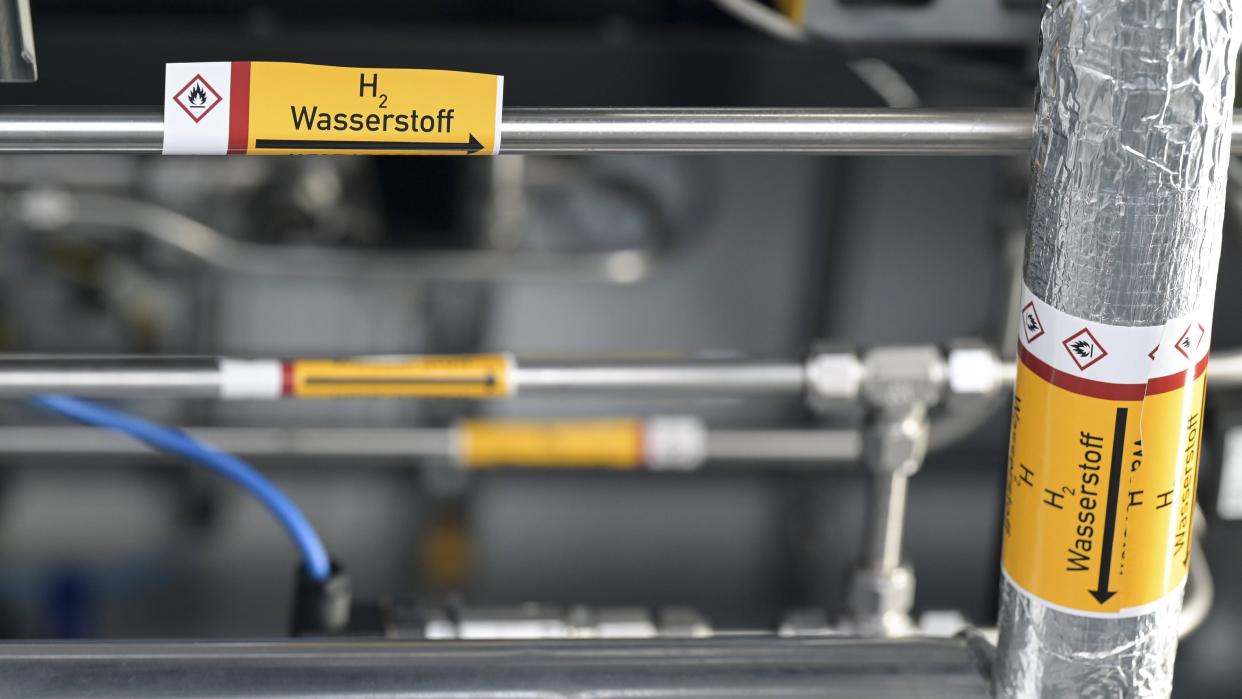

Germany’s previous government – the so-called traffic light coalition of Social Democrats, Greens, and Free Democrats under Chancellor Olaf Scholz – positioned the country as a key actor in decarbonizing the global trade of hydrogen (H2). Broadly speaking, this is sensible. Clean hydrogen plays an irreplaceable role in decarbonization, especially for heavy industry. The latter point is particularly relevant for Germany and the global energy market. Germany needs clean energy imports to decarbonize its heavy industry, and the global market needs an advanced economy willing to pay for this energy to create the cost benefits of economies of scale.
As these efforts have not fully materialized, the current German government under Chancellor Friedrich Merz is looking to revise the approach. On October 1, the draft Hydrogen Acceleration Act was adopted by the Federal Cabinet and will now move to further debate by the country’s two legislative bodies, the Bundestag and the Bundesrat. This legislation aims to dramatically accelerate the buildup of hydrogen infrastructure in Germany. It consolidates previous legal texts into one act that prioritizes deployment and removes bureaucratic barriers.
It also serves as one of the first major developments since the Federal Ministry of Economic Affairs and Energy published a monitoring report in which Minister Katherina Reiche called for a more pragmatic and realist approach to scaling H2 in Germany. As I detail below, this coincides with a series of setbacks for H2 ambitions occurring in Germany and internationally. I argue that, when implementing the Hydrogen Acceleration Act, it will be crucial for the German government to keep ambition on global green hydrogen alive amid its pragmatic efforts to build the H2 economy in Europe. I close with four recommendations on how it can do so.
What the Draft Legislation Accelerates
The draft Hydrogen Acceleration Act includes a series of significant legal and administrative changes that cover the entire H2 supply chain, including imports, production, storage, and distribution and transport systems.
The proposed legal changes show that the Merz government will prioritize deploying hydrogen infrastructure. This legislation would provide so-called overriding public interest for projects that produce, store, import, or transport hydrogen. Other changes that aim to reduce legal delays include fast-tracking judicial review and eliminating automatic delays. The former means that major projects will be automatically referred to a higher court at the first case of judicial review, while the latter means that projects will no longer be automatically delayed amid a pending appeal or lawsuit. These changes, among others, give projects a higher chance of being realized as they allow them to receive priority over other interests during assessment. With less risk from time intensive legal disputes, they will also move forward more quickly.
The changes to administrative procedures and timelines reinforce the legal adjustments. Proposed amendments in various energy, mining, and water laws aim to consolidate and simplify planning procedures while providing shorter deadlines for relevant approval authorities and simplifying the processes for pipeline conversion. This general effort to reduce bureaucracy is supported by a broad mandate to digitalize all procedures for project approval and planning. Together, these changes would reduce the overhead and risks of unnecessary delay, making it easier and faster for developers to draft and implement H2 projects.
Reality Check on European Hydrogen Dreams
All these changes are proposed amid Minister Reiche’s broader effort to put the German government in a position to give the EU’s green H2 ambitions a “reality check.” She has generally called for going beyond just renewable based hydrogen – opting for a more “flexible” and “technologically neutral” approach. For example, she has pushed for revising hydrogen frameworks at the EU level to allow for a higher share of gas and even coal-based electricity to power electrolyzers. The draft legislation supports this by removing the explicit preference that favors green hydrogen. While this may provide developers with some flexibility and simplicity, it also risks undermining industrial decarbonization – the primary reason for developing a hydrogen economy to begin with.
Pragmatic efforts to keep the rollout of hydrogen moving forward are needed
However, these actions are part of a broad attempt to reverse a trend. Projects across Germany have been cancelled, including green H2 production sites in Essen and green steel plants in Bremen that were backed by €1.3 billion in federal subsidies. These projects are not isolated. An October report from the Federal Court of Auditors found the that, despite more than €7 billion in subsidies in 2024 and 2025, supply and demand are both falling well below expectation. Research from Odenweller and Ueckerdt shows this to be in line with a rising gap in ambition and implementation as only 7 percent of the global green hydrogen capacity that has been announced has been finished on schedule.
There are several reasons for this. Initial targets were arguably formed without taking full account of the state of play and the technical limitations of scaling production and transport. Green H2 was starting from a negligible baseline so, arguably, it was never possible to scale as quickly as something like modularized solar panels, which can be plugged into existing grids. At the same time, industrial actors raised expectations by lobbying for broad adoption. However, the end use of H2 is a crucial detail. Green H2 is heavily reliant on robust CO2 pricing to compete with conventional fuels. Even then, it will likely never be competitive in applications for which alternatives such as direct electrification are possible. For example, electric vehicles are twice as efficient at using renewable electricity as hydrogen vehicles and up to four times more effective at converting energy into propulsion than gasoline vehicles.
Balancing Pragmatism
To an extent, pragmatic efforts to keep the rollout of hydrogen moving forward are needed because H2 will play a pivotal role in the energy transition. Simply put, it is conventionally impossible to decarbonize some sectors and processes without a molecule input like hydrogen. Many industries, such as chemical production, are key for economic and strategic reasons. They provide high paying jobs, are naturally R&D intensive, and provide outputs for both civilian and military end uses – for example, munitions and pharmaceuticals. Some form of hydrogen network will be required to allow Europe to keep this capacity amid decarbonization. Mitigating the risks associated with outsourcing strategic production is crucial, especially at a time defined by converging crises.
A degree of pragmatism also supports strategic autonomy. European firms like Germany’s Thyssenkrupp Nucera and Sunfire SE are still competitive in this technology – despite increasing competition from China. In a similar case with other renewable technologies, Chinese production has emerged rapidly, reaching 60 percent of global manufacturing capacity by 2025. In this context, there is a real risk that – without support – China will consolidate this technology. Yet, Europe still has an opportunity to prevent being totally eclipsed. Building projects with European technology where possible supports European industry and reduces dependence on foreign technology at a time when energy inputs are increasingly weaponized. Moreover, hydrogen itself is also increasingly seen by companies such as Rheinmetall as a means to make European armed forces less import dependent. In this context, Europe retains several advantages for building a competitive hydrogen ecosystem in the long run. Across the continent, there is an abundance of high quality solar and wind. Pairing their development with electrolyzers allows Europe to optimize regional energy resources with a flexible energy carrier. Countries like Germany also benefit from a highly skilled work force that can build the necessary infrastructure and a cost of capital for new energy projects that remains lower than in emerging markets.
Resisting a Total Backslide on Green Hydrogen
It is more important than ever that the German government avoids a collapse in global green H2 ambitions. There is a big difference between simplifying rules to kick-start a stalling sector and providing overly generous provisions for the incumbent gas industry. The emissions budget – and the Carbon Clock for 1.5°C – is already almost gone, making an overshoot all but certain. A significant disruption in green H2 buildup will only worsen these conditions by delaying or diverting investments needed to decarbonize hard to abate sectors.
Furthermore, the 2025 Global Hydrogen Review of the International Energy Agency (IEA) shows that, since 2021, electrolyzer manufacturing capacity has increased sixfold, installed electrolyzer capacity has increased ninefold, and low emission hydrogen production has grown by 60 percent. While these numbers come from a low baseline, they do illustrate general upward trends that have been accompanied by an unprecedented mix of scientific studies and innovative business models from the private sector.
Germany can play a decisive role in maintaining global momentum in green hydrogen deployment while securing its own energy transition
As a major energy importer, Germany plays a pivotal role in maintaining this momentum. When it adopted its National Hydrogen Strategy in June 2020, Germany set one of the most important international benchmarks for the green hydrogen trade. Emerging economies looking to export green energy pegged their export and investment strategy around this development. It was reinforced by foreign policy initiatives such as H2-Diplo that established offices to help key countries consolidate their green hydrogen strategies and partner with Germany. Walking away from these successes will undermine confidence in the fledgling hydrogen sectors far beyond Europe. If Germany will not stick to these criteria, there is little likelihood of others doing so either as there will be no major off taker willing to pay for projects that meet strict emissions criteria. If these projects never come online, we may lose the opportunity to get green hydrogen in the future.
In the last month alone, Chile has announced plans to scale back green hydrogen production targets, while German energy company RWE withdrew from projects in Namibia and deployment in Egypt has stalled. Flagging investor confidence raises concerns. Research recently published in nature energy has shown that European demand is key for competitive pricing because it derisks the cost of capital.
Recommendations
Amid this flagging confidence, Germany can play a decisive role in maintaining global momentum in green hydrogen deployment while securing its own energy transition. To do so, it should:
Avoid infrastructure investments that prolong a significant import dependency on natural gas. Asymmetrical natural gas import dependency has already extracted an irreparable toll on Germany. Avoiding repeating this is paramount. Accordingly, producing hydrogen with an imported resource does not make sense in the long term because it further cements gas dependency. Building a hydrogen economy on gas-based hydrogen will only weaken German energy security.
Retain green criteria for some key sectors, such as steel and chemicals, through lead markets. Despite their case for scaling green H2 demand, lead markets have thus far been largely underutilized. However, as green criteria are being rolled back more broadly, pegging some portion of demand through lead markets can serve as a measure to maintain an incentive for projects with high-ambition green H2.
Reaffirm and expedite hydrogen partnerships with strategic producers. Wavering prospects for Germany’s role in the global green hydrogen trade are troubling. Germany remains an energy importer and this will not change. Multilateral trade architecture, fair technology markets, and cross-border infrastructure will be crucial if Germany hopes to tap into robust global markets. Withdrawing from this space gives China room to create further asymmetrical energy relations with the best producers. Non-EU exporting countries need a clear and stable regulatory framework to justify private investments and government support. The EU and Germany must be more strategic and consider how green trade and European private capital helps accelerate the development of a global green energy network – a network that will be essential for providing Germany with secure clean energy in the long term.
Prioritize reforming efforts to develop regional renewable electricity infrastructure that enables cost effective gains from energy efficiency and direct electrification. The Federal Court of Auditors calls for a Plan B so that Germany’s climate obligations can be met even without a scaled hydrogen market. Electricity should be the primary alternative because it is a more cost competitive way to decarbonize than hydrogen in many end uses. However, electrifying processes is capital intensive and requires a lot of affordable electricity. Offshore wind in the North and Baltic Seas is one of the only nearby sources that can reliably provide the volumes of power needed. However, deployment has stalled. In August 2025, a 2.5 GW tender did not receive any proposals while a finished 1 GW project has been waiting for a year to connect to the grid. In this context, Germany’s Federal Ministry of Economic Affairs and Energy should prioritize reinforcing the power grid and reforming the relevant procurement processes so that these resources can be brought into the system to help electrify heavy industry.